
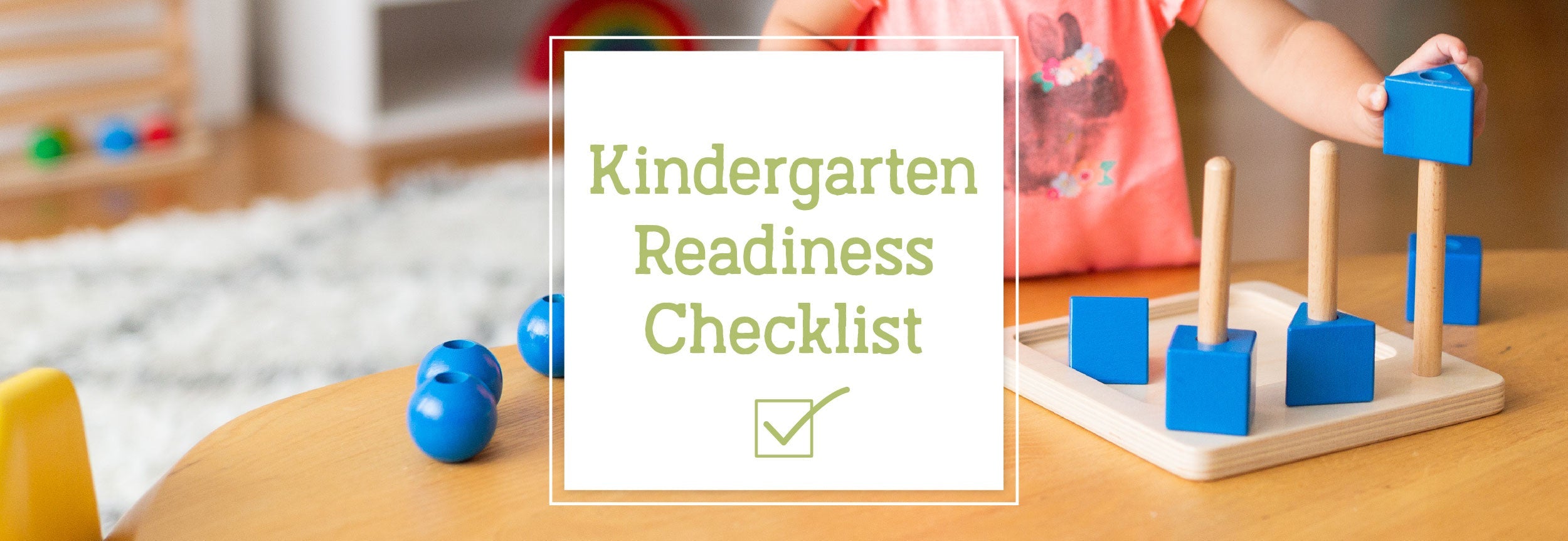
Common questions parents have about kindergarten readiness:
Keep reading or click on a specific question to jump to the topic.


Language and Communication Skills
Listening, speaking, and sharing ideas help young children express their needs, follow directions, and connect with others.
Does your child . . .
- speak in short sentences?
- follow multi-step directions? (two or more)
- ask and answer simple questions?
- retell a simple story or event?
- enjoy stories, rhymes, and songs?
Reading and Writing Skills
It is common to begin kindergarten with minimal reading and writing skills. The following pre-reading and pre-writing skills are helpful base skills.
Does your child . . .
- say or sing the alphabet?
- identify most letter names and sounds?
- recognize or print their first name?
- draw straight and curved lines?
Math and Reasoning Skills
Counting, comparing, and classifying objects are basic number-sense and problem-solving skills that support new learning.
Does your child . . .
- count objects and identify numbers 1–10?
- identify some basic colors and shapes?
- group objects by shape, color, or number?
- compare objects by amounts or size?
Social and Emotional Skills
Cooperating with others and expressing appropriate emotions help young children build positive friendships.
Does your child . . .
- play with other children and share or take turns?
- express their feelings of happiness, frustration, or sadness using appropriate words?
- separate from you for brief periods without becoming upset?
- listen and participate in group activities?
Fine and Gross Motor Skills
Physical activities such as sports, as well as handiwork such as crafts and play, help young children develop hand-eye coordination and complete tasks independently.
Does your child . . .
- hold a crayon or pencil to draw simple shapes?
- use child-safe scissors?
- run, hop, skip, catch, throw with growing coordination?
- use small objects such as blocks, beads, and puzzles with steady hands?
Independence Skills
Children develop confidence when they accomplish tasks independently.
Does your child . . .
- follow a daily routine?
- pick up after themself?
- dress and put on outerwear by themself?
- use the bathroom independently?
- use utensils unassisted at mealtime?
How can I help my child get ready for kindergarten?
One of the beauties of homeschooling is that the transition from preschool to kindergarten is pretty smooth! We’ve compiled a starter list of activities you can do to help your child prepare for kindergarten.
| Skill Area | Try These Quick Activities (pick 1–2 each week) |
|---|---|
| Fine-motor skills (hands & fingers) |
|
| Social and emotional skills |
|
| Independence (self-help) |
|
| Language skills (listening & speaking) |
|
Want more ideas?
Download our Kindergarten Readiness Checklist for a list of fun ideas in the following areas of early childhood development:
 Get Your FREE Download

Swipe in mobile
You may also like . . .
Swipe in mobile





Related Posts
-

What Is a Subordinating Conjunction?
Find answers to frequently asked questions about subordinating conjunctions in this blog post. Learn about subordinating conjunctions and how they are different from coordinating conjunctions. Download a free list of...
What Is a Subordinating Conjunction?
Find answers to frequently asked questions about subordinating conjunctions in this blog post. Learn about subordinating conjunctions and how they are different from coordinating conjunctions. Download a free list of...
Read more What Is a Subordinating Conjunction? -

What Are Being Verbs?
Find answers to frequently asked questions about being verbs in this blog post. Learn about being verbs and how they are different from action verbs. Download a free list of...
What Are Being Verbs?
Find answers to frequently asked questions about being verbs in this blog post. Learn about being verbs and how they are different from action verbs. Download a free list of...
Read more What Are Being Verbs? -

What Are Prepositions?
Find answers to frequently asked questions about prepositions in this blog post. Learn about prepositions and how to answer your child’s grammar questions concerning prepositions. Download a free list of...
What Are Prepositions?
Find answers to frequently asked questions about prepositions in this blog post. Learn about prepositions and how to answer your child’s grammar questions concerning prepositions. Download a free list of...
Read more What Are Prepositions? -

Are Homeschoolers Too Sheltered?
Many parents struggle with the question of how much to shelter their children from the difficulties and trials in life. Homeschool families are no exception. Are homeschoolers too sheltered? Jenny...
Are Homeschoolers Too Sheltered?
Many parents struggle with the question of how much to shelter their children from the difficulties and trials in life. Homeschool families are no exception. Are homeschoolers too sheltered? Jenny...
Read more Are Homeschoolers Too Sheltered? -
 1 comment
Do Kids Really Need to Learn Cursive?
Is learning cursive really necessary? You might be surprised by Jenny’s answer. In this blog post and video, she shares some of the benefits of learning cursive and how The...
1 commentDo Kids Really Need to Learn Cursive?
Is learning cursive really necessary? You might be surprised by Jenny’s answer. In this blog post and video, she shares some of the benefits of learning cursive and how The...
Read more Do Kids Really Need to Learn Cursive? -
 47 comments
Months of the Year
Learning the months of the year is easy with this adorable "Months of the Year" song that takes children through the changing seasons. Keep reading for fun activities to do...
47 commentsMonths of the Year
Learning the months of the year is easy with this adorable "Months of the Year" song that takes children through the changing seasons. Keep reading for fun activities to do...
Read more Months of the Year -
 8 comments
Days of the Week
Learning the names of the days is easy with this simple Days of the Week song from The Good and the Beautiful. Find fun ways to practice putting the days...
8 commentsDays of the Week
Learning the names of the days is easy with this simple Days of the Week song from The Good and the Beautiful. Find fun ways to practice putting the days...
Read more Days of the Week -
 27 comments
Top 5 Tips for Homeschool Planning
Summer is the perfect time to plan ahead! In this blog post and short video, Jenny Phillips shares her top five tips for simple, yet effective planning for the next...
27 commentsTop 5 Tips for Homeschool Planning
Summer is the perfect time to plan ahead! In this blog post and short video, Jenny Phillips shares her top five tips for simple, yet effective planning for the next...
Read more Top 5 Tips for Homeschool Planning -

Tips for Managing Summer Screen Time
It’s easy for screens to consume your child's time, especially during the summer months. Jenny Phillips addresses this all-too-common dilemma facing families today. Find practical screen-free tips on how to...
Tips for Managing Summer Screen Time
It’s easy for screens to consume your child's time, especially during the summer months. Jenny Phillips addresses this all-too-common dilemma facing families today. Find practical screen-free tips on how to...
Read more Tips for Managing Summer Screen Time -
 3 comments
Tips for Limiting Screen Time
Technology brings a wealth of information to our fingertips, but overuse of screen time has become an issue for many families. Jenny Phillips shares her family’s journey to limiting screen...
3 commentsTips for Limiting Screen Time
Technology brings a wealth of information to our fingertips, but overuse of screen time has become an issue for many families. Jenny Phillips shares her family’s journey to limiting screen...
Read more Tips for Limiting Screen Time -
 10 comments
Homeschooling Year-Round vs Traditional
Is a traditional or year-round homeschool schedule best for your family? Watch this video from The Good and the Beautiful YouTube channel to find out some benefits and drawbacks of...
10 commentsHomeschooling Year-Round vs Traditional
Is a traditional or year-round homeschool schedule best for your family? Watch this video from The Good and the Beautiful YouTube channel to find out some benefits and drawbacks of...
Read more Homeschooling Year-Round vs Traditional -

Is Sentence Diagramming Necessary for Learning ...
Sentence diagramming can be a grammar exercise students either love or run from. Sit down with Jenny Phillips in this video and blog post as she discusses how and why...
Is Sentence Diagramming Necessary for Learning ...
Sentence diagramming can be a grammar exercise students either love or run from. Sit down with Jenny Phillips in this video and blog post as she discusses how and why...
Read more Is Sentence Diagramming Necessary for Learning Grammar? -

What Is a Solar Eclipse?
Witnessing a total solar eclipse is a once-in-a-lifetime experience for most. Learn all about total solar eclipses and how to safely view one. Then download directions for a fun solar...
What Is a Solar Eclipse?
Witnessing a total solar eclipse is a once-in-a-lifetime experience for most. Learn all about total solar eclipses and how to safely view one. Then download directions for a fun solar...
Read more What Is a Solar Eclipse? -
 2 comments
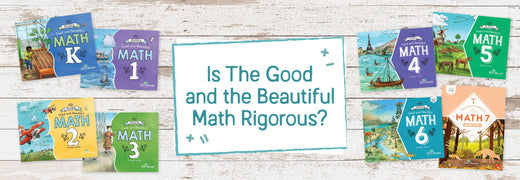
Is The Good and the Beautiful Math Rigorous?
What is rigor in mathematics, and is Simply Good and Beautiful Math rigorous enough? A rigorous homeschool math course teaches more than just memorization of facts and steps. Keep reading...
2 commentsIs The Good and the Beautiful Math Rigorous?
What is rigor in mathematics, and is Simply Good and Beautiful Math rigorous enough? A rigorous homeschool math course teaches more than just memorization of facts and steps. Keep reading...
Read more Is The Good and the Beautiful Math Rigorous? -
Count to 15
Teach children how to count to 15 through music and illustration with our delightful video on The Good and the Beautiful Kids Channel on YouTube. Then keep reading for more...
Count to 15
Teach children how to count to 15 through music and illustration with our delightful video on The Good and the Beautiful Kids Channel on YouTube. Then keep reading for more...
Read more Count to 15 -
 1 comment
Count by 10's
Counting by 10's is an easy pattern to introduce to children once they have mastered counting by 1's. Print the free download. Then sing along with the children in this...
1 commentCount by 10's
Counting by 10's is an easy pattern to introduce to children once they have mastered counting by 1's. Print the free download. Then sing along with the children in this...
Read more Count by 10's -
 1 comment
The Good and the Beautiful Science: What It’s A...
Science is an important part of any homeschool education, but our team believes homeschool science curriculum should be fun and inspiring too! Our best-selling science units make science exciting to...
1 commentThe Good and the Beautiful Science: What It’s A...
Science is an important part of any homeschool education, but our team believes homeschool science curriculum should be fun and inspiring too! Our best-selling science units make science exciting to...
Read more The Good and the Beautiful Science: What It’s All About -
The Good and the Beautiful Handwriting: What It...
The Good and the Beautiful’s award-winning handwriting curriculum was named the most popular among homeschool families every year since 2022! When you open one of our handwriting books, you immediately notice The Good...
The Good and the Beautiful Handwriting: What It...
The Good and the Beautiful’s award-winning handwriting curriculum was named the most popular among homeschool families every year since 2022! When you open one of our handwriting books, you immediately notice The Good...
Read more The Good and the Beautiful Handwriting: What It's All About -
 2 comments
Homeschooling with The Good and the Beautiful: ...
Once there was a homeschool mom who loved books and nature and God. She created her dream language arts curriculum for her own kids. And then she shared it for...
2 commentsHomeschooling with The Good and the Beautiful: ...
Once there was a homeschool mom who loved books and nature and God. She created her dream language arts curriculum for her own kids. And then she shared it for...
Read more Homeschooling with The Good and the Beautiful: What It’s All About -
 2 comments
Second Grade Sight Words
Master second grade sight words! Download a free list of sight words used in The Good and the Beautiful Level 2 Language Arts and some fun sight word games for practice.
2 commentsSecond Grade Sight Words
Master second grade sight words! Download a free list of sight words used in The Good and the Beautiful Level 2 Language Arts and some fun sight word games for practice.
Read more Second Grade Sight Words


- Choosing a selection results in a full page refresh.
- Opens in a new window.
1 comment
This is incredibly helpful! So thankful for all of the free printouts!