


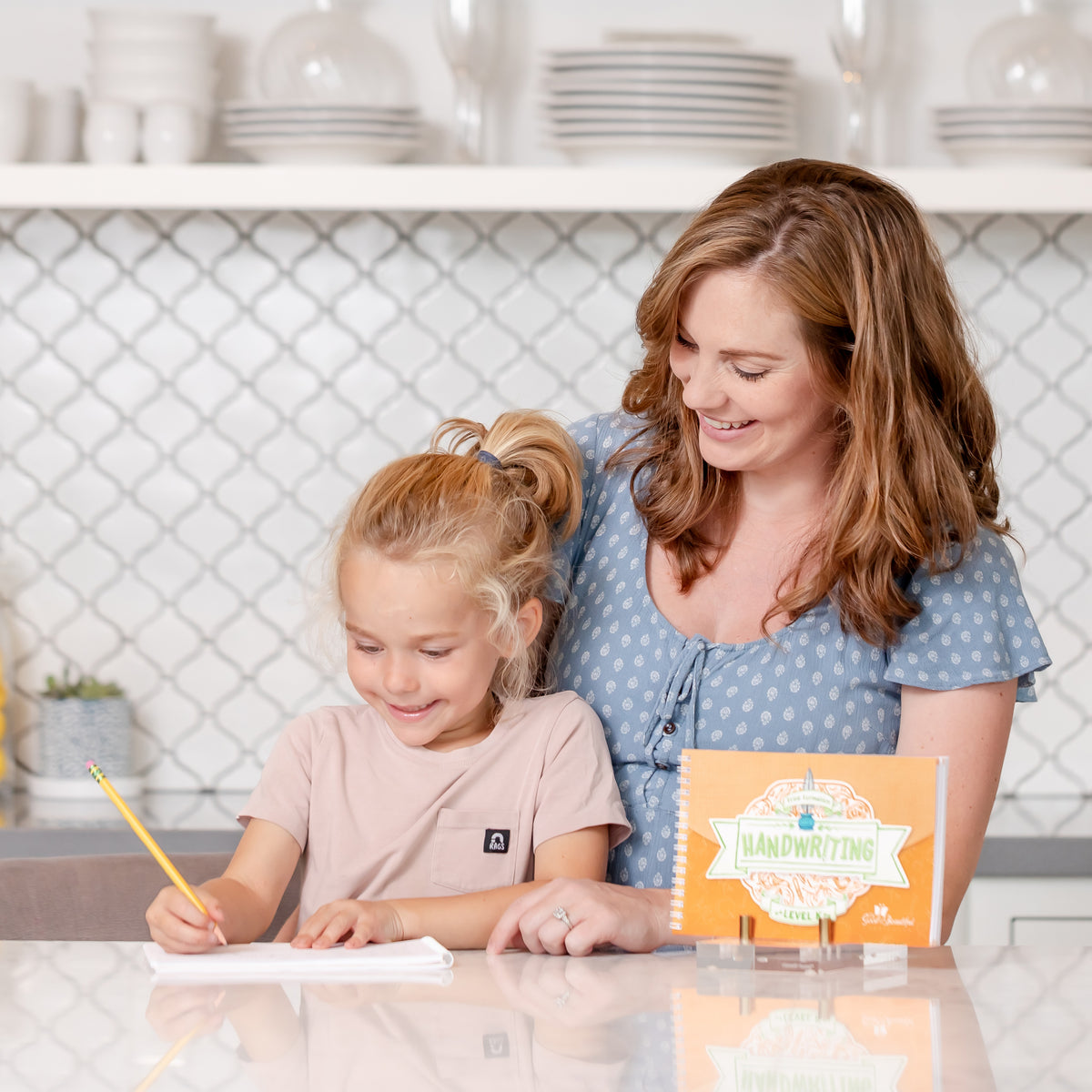
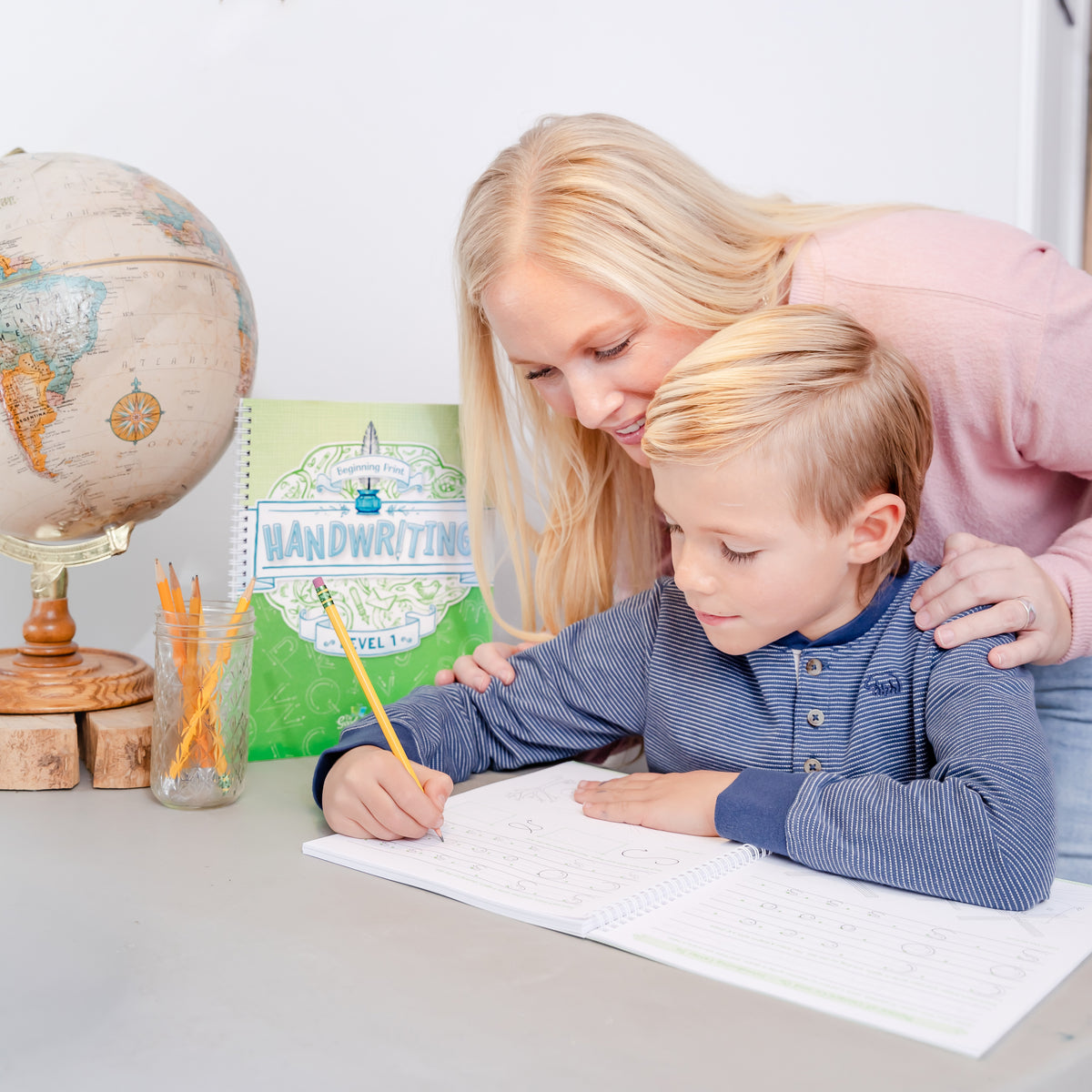
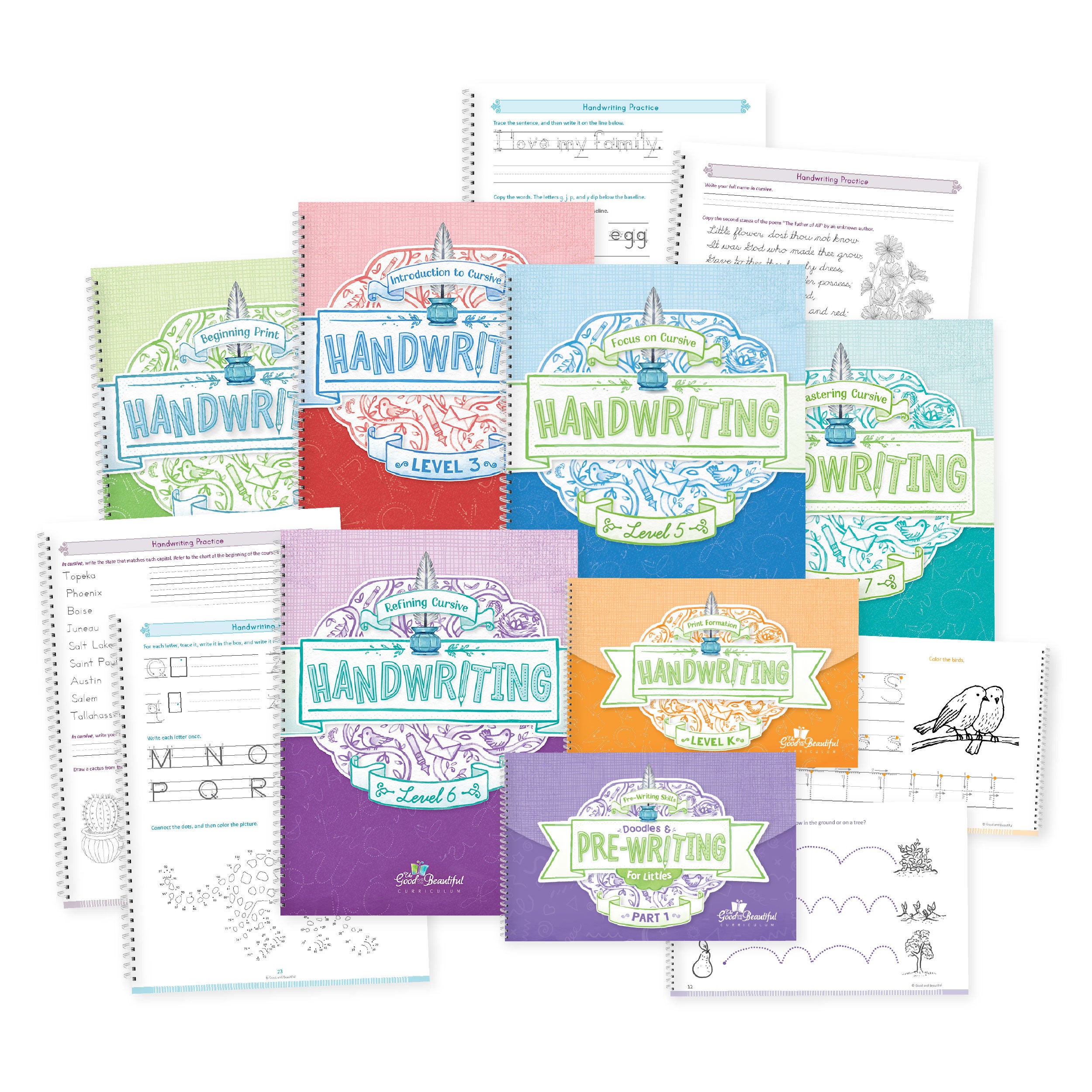
Sample The Good and Beautiful Handwriting
You may also like . . .





Related Posts
-

How Much Math Do Homeschoolers Really Need?
Which math classes does my homeschooler need to take? Join Jenny Phillips in this blog post, where she answers common questions about homeschool math.
How Much Math Do Homeschoolers Really Need?
Which math classes does my homeschooler need to take? Join Jenny Phillips in this blog post, where she answers common questions about homeschool math.
Read more How Much Math Do Homeschoolers Really Need? -

How to Adapt Homeschool Curriculum
Why, when, and how should you adapt homeschool curriculum to meet your child’s individual needs? Discover insightful and practical tips and ideas for making your curriculum work effectively for your...
How to Adapt Homeschool Curriculum
Why, when, and how should you adapt homeschool curriculum to meet your child’s individual needs? Discover insightful and practical tips and ideas for making your curriculum work effectively for your...
Read more How to Adapt Homeschool Curriculum -

My Homeschool Plans for This Year
Jenny Phillips talks openly about a time when she had one of her hardest homeschool years ever and the changes she made for the following school year. Find out why...
My Homeschool Plans for This Year
Jenny Phillips talks openly about a time when she had one of her hardest homeschool years ever and the changes she made for the following school year. Find out why...
Read more My Homeschool Plans for This Year -

How to Homeschool Multiple Levels of Language A...
Wondering how to teach multiple levels of homeschool curriculum simultaneously? Learn how to teach language arts to all your children in under an hour.
How to Homeschool Multiple Levels of Language A...
Wondering how to teach multiple levels of homeschool curriculum simultaneously? Learn how to teach language arts to all your children in under an hour.
Read more How to Homeschool Multiple Levels of Language Arts at One Time -
 1 comment
Great Is Thy Faithfulness
Marvel at God’s mercies with the hymn “Great Is Thy Faithfulness,” performed by Patch Crowe and Porter Jordan in stunning Iceland.
1 commentGreat Is Thy Faithfulness
Marvel at God’s mercies with the hymn “Great Is Thy Faithfulness,” performed by Patch Crowe and Porter Jordan in stunning Iceland.
Read more Great Is Thy Faithfulness -

Nearer, My God, to Thee
Feel God’s presence near with our stunning arrangement of “Nearer, My God, to Thee,” performed by siblings Yahosh and Oyoyo Bonner.
Nearer, My God, to Thee
Feel God’s presence near with our stunning arrangement of “Nearer, My God, to Thee,” performed by siblings Yahosh and Oyoyo Bonner.
Read more Nearer, My God, to Thee -

How to Have Fewer Meltdowns in Homeschool
Struggling with meltdowns in your homeschool? Get some helpful insights and tips that you can use to help your child address their feelings and behaviors.
How to Have Fewer Meltdowns in Homeschool
Struggling with meltdowns in your homeschool? Get some helpful insights and tips that you can use to help your child address their feelings and behaviors.
Read more How to Have Fewer Meltdowns in Homeschool -

Why Audiobooks Are So Good for Your Child
What are the benefits of audiobooks? Learn why listening to the right audiobooks can powerfully strengthen your child’s mind and heart.
Why Audiobooks Are So Good for Your Child
What are the benefits of audiobooks? Learn why listening to the right audiobooks can powerfully strengthen your child’s mind and heart.
Read more Why Audiobooks Are So Good for Your Child -

How I Design My Day
Do you find yourself not having enough time in your day to get things done? Learn how to be intentional with your time and experience more joy and fullness in...
How I Design My Day
Do you find yourself not having enough time in your day to get things done? Learn how to be intentional with your time and experience more joy and fullness in...
Read more How I Design My Day -

10 Clean Books for Tweens
Looking for wholesome, character-building books for your tween that also teach about history, culture, and compassion? In this blog post and video, Jenny Phillips shares her top 10 clean book...
10 Clean Books for Tweens
Looking for wholesome, character-building books for your tween that also teach about history, culture, and compassion? In this blog post and video, Jenny Phillips shares her top 10 clean book...
Read more 10 Clean Books for Tweens -

Thinking of Homeschooling? Simple Steps to Crea...
Thinking of homeschooling, but not sure where to start? Follow six simple steps to create a schedule and homeschooling plan that will work for your family. Find ideas for structuring...
Thinking of Homeschooling? Simple Steps to Crea...
Thinking of homeschooling, but not sure where to start? Follow six simple steps to create a schedule and homeschooling plan that will work for your family. Find ideas for structuring...
Read more Thinking of Homeschooling? Simple Steps to Creating a Schedule -

Should You Leave Bullied Children in School?
Should bullied kids be left in school so they can learn how to work out their problems? Does facing things like bullying make kids stronger? Discover ways to respond if...
Should You Leave Bullied Children in School?
Should bullied kids be left in school so they can learn how to work out their problems? Does facing things like bullying make kids stronger? Discover ways to respond if...
Read more Should You Leave Bullied Children in School? -
 3 comments
How and Why to Stop Yelling at Your Kids
Learn strategies and insights about how—and why—to stop yelling at your kids. Gentle communication with your children and small changes can bring trust, love, and peace into your home.
3 commentsHow and Why to Stop Yelling at Your Kids
Learn strategies and insights about how—and why—to stop yelling at your kids. Gentle communication with your children and small changes can bring trust, love, and peace into your home.
Read more How and Why to Stop Yelling at Your Kids -

Does Unschooling Really Work?
What is unschooling, and does it work? Many homeschool families ask this question, especially families new to homeschooling.
Does Unschooling Really Work?
What is unschooling, and does it work? Many homeschool families ask this question, especially families new to homeschooling.
Read more Does Unschooling Really Work? -

Reducing Resistance in Homeschool
What do you do when your child resists a particular assignment or a subject in homeschool—or resists homeschool altogether? Learn practical, effective tips that can bring peace and joy into...
Reducing Resistance in Homeschool
What do you do when your child resists a particular assignment or a subject in homeschool—or resists homeschool altogether? Learn practical, effective tips that can bring peace and joy into...
Read more Reducing Resistance in Homeschool -
 2 comments
What If My Homeschooled Child Is Behind Grade L...
Learn strategies for identifying the level and pace that will work best for your child, and find hope in actionable steps to get your child back on track.
2 commentsWhat If My Homeschooled Child Is Behind Grade L...
Learn strategies for identifying the level and pace that will work best for your child, and find hope in actionable steps to get your child back on track.
Read more What If My Homeschooled Child Is Behind Grade Level? -

Why and How to Have Quiet Time in Homeschool
Finding some quiet time for yourself can be challenging as a homeschool parent. Spending lots of time with our children is a blessing, but sometimes we need a break. In...
Why and How to Have Quiet Time in Homeschool
Finding some quiet time for yourself can be challenging as a homeschool parent. Spending lots of time with our children is a blessing, but sometimes we need a break. In...
Read more Why and How to Have Quiet Time in Homeschool -

How to Homeschool K–8 Math
You can teach homeschool math! Have you wondered how to teach math effectively to your children when you don’t feel like you are good at math? Or what to do...
How to Homeschool K–8 Math
You can teach homeschool math! Have you wondered how to teach math effectively to your children when you don’t feel like you are good at math? Or what to do...
Read more How to Homeschool K–8 Math -

How to Homeschool High School Math
Have you wondered what math your child needs to get to by the end of high school? Or how to ensure you are meeting state standards? Or how to teach...
How to Homeschool High School Math
Have you wondered what math your child needs to get to by the end of high school? Or how to ensure you are meeting state standards? Or how to teach...
Read more How to Homeschool High School Math


